I do not complain about my actual disability at all. My mother even told me that this last weekend. I complain how outside factors make it hard for me to exist outside of my house – and even inside my house it’s hard. I don’t live in an accessible unit. The least accessible part of living in the United States is the lack of transportation options.
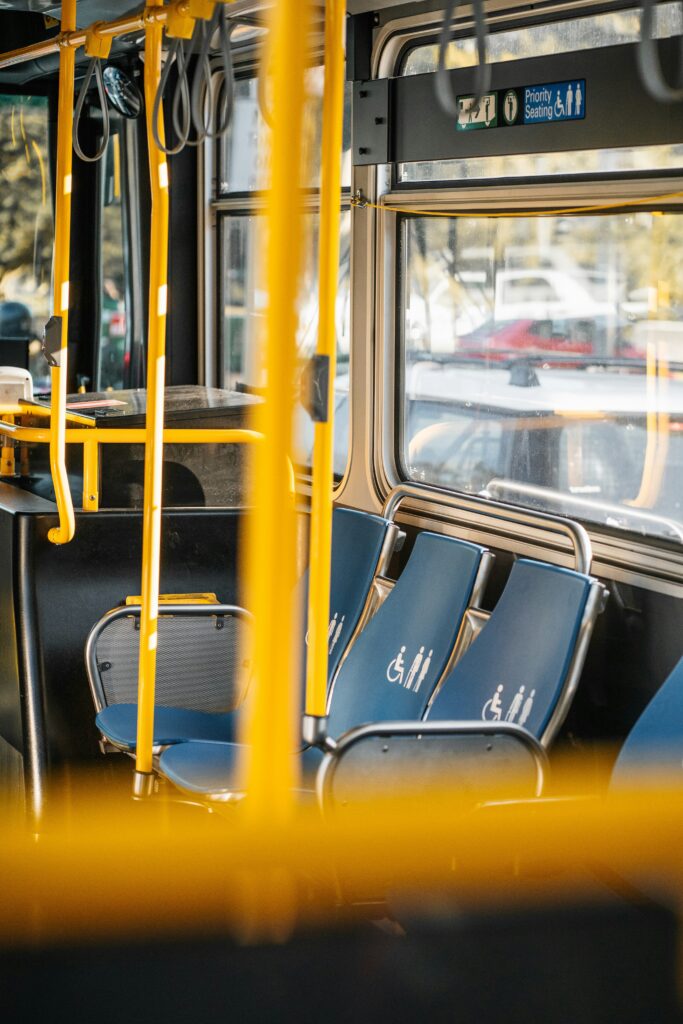
We have public transportation in some cities, but they’re not the safest places to be, especially as a woman with a physical disability. We have Uber and Lyft, but they challenge disability rights and laws left and right. And wheelchair accessible vehicles aren’t readily available on those apps. More people are reliant on their car and the freedom of going somewhere whenever they please, but that leaves very little opportunity to grow the public transit system. There is no funding for it if it is under utilized. A country as big and diverse as the United States is hard to build a fully efficient, working transit system.
Amtrak
Amtrak exists but there are limitations. Amtrak suffers from outdated infrastructure, freight laws and is extremely expensive. Train travel is tedious, takes more time, and is very unreliable due to delays and priorities of other trains using the same rail system. I have taken Amtrak from Milwaukee to Memphis one time. It is an overnight train which helped the time pass faster, but I still had to take an uber across Memphis over to the Greyhound station to take a bus to my actual destination of Nashville. And that was about a four hour bus ride through the middle of nowhere Tennessee. Trains no longer run to certain major cities in the US for one reason or another, so it isn’t a very feasible solution for most people. Also, unless you have a week to go from one side of the country to the other, you’re probably just going to pay for a few hour cross-country flight.
Intercity and Regional Transit Woes
Regional and city trains are very few and far between. I love Chicago’s transit system, but it’s at some points dangerous, and not all stops are wheelchair accessible, putting me one stop away from where I wanted to be in sometimes awful conditions. City buses aren’t bad, but in winter they are nearly impossible to ride for a wheelchair user because not all stops are accessible due to snow removal problems. Waiting in the street is extremely unsafe for a non-standing pedestrian.
When I lived in Nashville there was a commuter train. It ran maybe six times a day – Three times in the morning, three times in the evening and had four stops. The city continues to talk about expanding the public transit network in the region for almost two decades, however, no major movement as of now. So that commuter train feels pretty useless as public transportation unless you have working hours around those times it runs and you work directly downtown. It’s even a little walk to the bus station from the train station. And don’t even get me started on the buses in Nashville, they’re irrelevant.
Airlines Aren’t Great Either
Air travel in a wheelchair is a very embarrassing process that requires an aisle chair and multiple people to strap you in and take you to your seat. You’re usually first on last off and that can pose a hindrance when you have a tight connection. I try to be very up front with flight attendants if I do have a connection but I try to avoid connections all together.
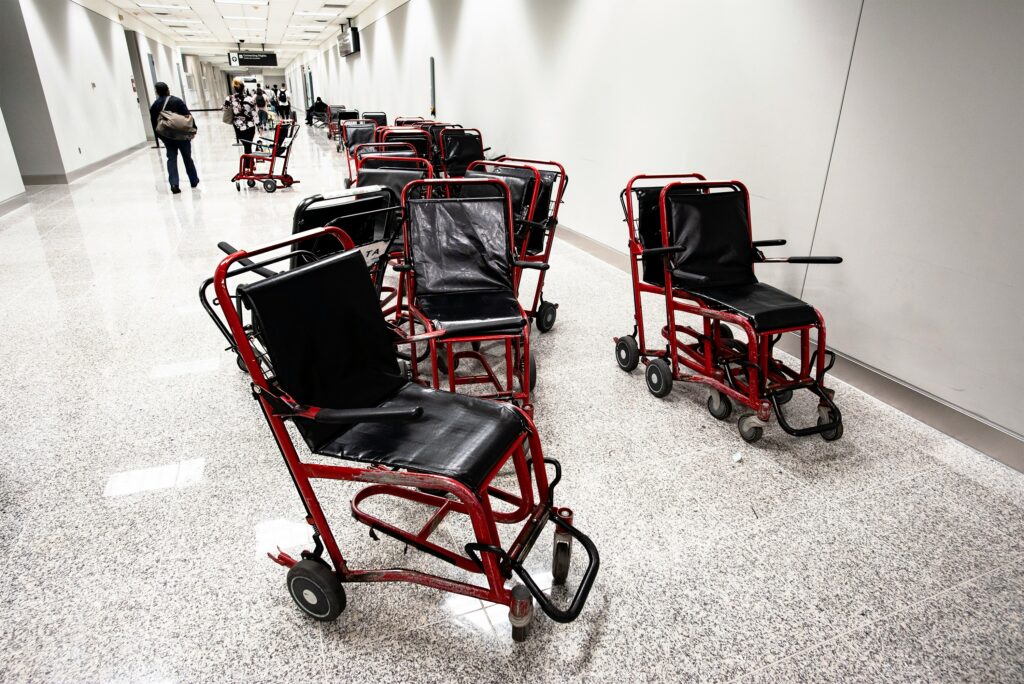
There are proposals and patents and overhauls to mitigate mistreatment of wheelchair users and their equipment by airlines on an aircraft, with hardly any movement. Proposals of wheelchair accessible seating where you can fly IN your wheelchair for comfort and to avoid injury to the user has been around for at least a decade. Common pushback is it reduces the amount of seating or they’d have to change how wide the aisles are in airplanes. It’s about money to them, and not making access to the airplane universal and pleasant for all fliers. And all fliers pay the same price, by the way… to be treated more like luggage than a human being. (I have had great gate attendants, it’s not their fault they’re just doing their jobs).
Inequalities in Air Travel
Another point for allowing wheelchair users to fly in their wheelchairs is wheelchair damage by the aircraft carrier while stowing the wheelchair away. In 2024, passengers reported 11,357 mobility devices broken during travel. Delta broke my chair when I was 16. Didn’t realize it until the window to complain was closed. And my case was minor. There are people whose chairs – their feet – become unusable because of mishandling during transport. So they’re stranded in an airport waiting for a replacement. It’s very hard to file claim and receive compensation for repairs. Wheelchairs and other devices are VERY expensive to replace and repair. And sometimes, wheelchairs get lost the same way luggage gets lost. So tell me what’s more fair. Honestly more wheelchair users would fly if they changed the way airplane seating worked.
Having a car is great, but not an option for many people with disabilities. Cars are EXPENSIVE. The adaptations to the cars are even more expensive. It’s not feasible for a lot of us. Public transportation just makes so much more sense. Less actual car traffic, less gas being used, more accessibility. I didn’t even get into rideshare. I think that’ll be next week.