If you’re here for the first time hi! The introductory post to JWL was last week. Now, this week, we move on to the biggest reason I exist. Advocacy is the act or process of supporting a cause or proposal. This is the definition from Merriam-Webster Dictionary. You can advocate for any cause. For instance, I can advocate for something like wearing pink on Wednesdays. I can advocate for another person, like a family member or a friend. However, my favorite type of advocacy is self-advocacy.
Self-advocacy is defined as a skill of effectively communicating your own needs, wants, and rights to achieve goals. Self-advocacy is a learned skill. People with disabilities begin to self-advocate very young. You’re never too young to start.
Furthermore, the society we live in is not built for a person with a disability. Far too often we need to as for help. Importantly, the ability to ask for help is not weakness. It takes strength to know when you need assistance to accomplish a task. For examples, the task can be as small as reaching something on a shelf or as large as asking for equipment that will allow you to perform a task. Another example, there are adaptive devices such as an augmentative and alternative communication (AAC) device. Using an AAC device is one way to exercise effective communication needed for self-advocacy.
Learning to Self-Advocate
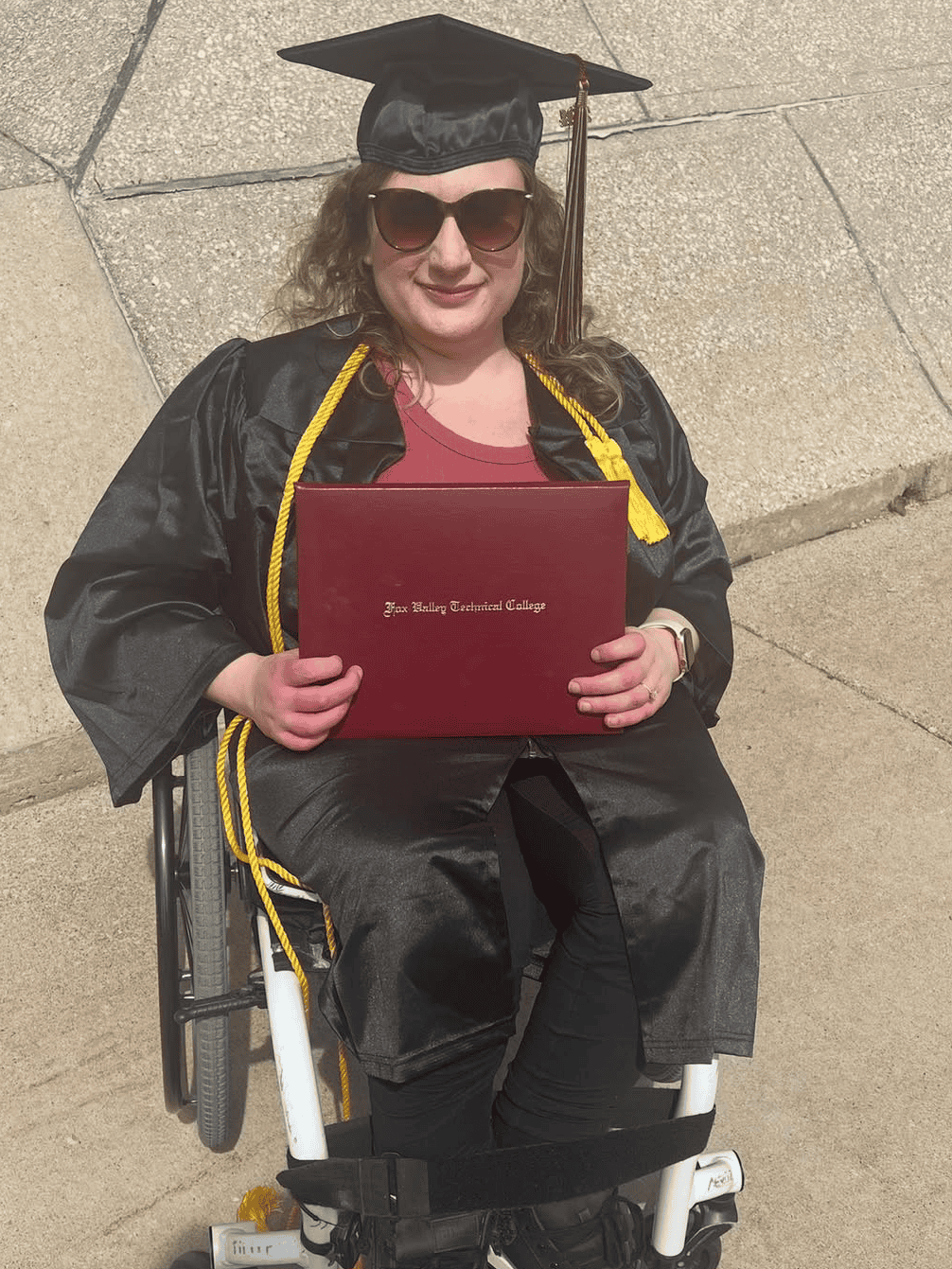
I advocated for myself plenty to get through my Occupational Therapy Assistant program. It is a responsibility, a big one, at that to be responsible for your own equal access. I was the only person in the history of my program to attend using a wheelchair. It took collaboration with my instructors to adapt but not change the requirements to the best practice for me to get the most out of my education. I believe this was the hardest hit of reality that no one will give me anything if I didn’t ADVOCATE for myself. But many are willing and excited to help if they know what you need for accommodation. Most people have good intentions.
Self-Advocacy Skills
In order to self-advocate for yourself, you need to know some tricks. In my opinion, the biggest skill used in self-advocacy is problem solving. Problem solving in advocacy requires the ability to take a problem, and come up with a plan to solve it to suit your unique needs. In order to fix most problems, you need to communicate effectively no matter how you communicate – Writing, spoken word, AAC devices are all forms of communication. The more you advocate, the more confident you become in your abilities and problem solving skills.
Self-advocacy can be LIFE CHANGING. Advocacy often leads to better outcomes in perceived quality of life, enjoyment in activities, and work and school based progress. It provides a feeling of empowerment when many of us can feel like we have no control over what happens with our health, with our social life and our employment circumstances. I’m definitely not talking about this from any experience whatsoever. (This is sarcasm)
Lastly, remember posts come out every Wednesday! Next week we’ll dive further into steps you can take to be a successful self-advocate.
2 Comments
Chase West
Great read. Thanks samm
Sharon Verhagen
Hoping you can reach people who need to read this. You never give up. Look forward to more of your writings